

Cold brew and iced coffee may arrive in similar glasses, yet the way each drink is prepared can create differences in flavor, caffeine, aroma, strength, and mouthfeel. The difference between cold brew and iced coffee starts with brewing temperature because one extracts grounds without hot water while the other begins as traditionally brewed coffee before chilling. Coffee lovers comparing the two will find that brewing time, dilution, bean choice, serving size, and preparation at a coffee shop can affect what ends up in the cup. Taste, caffeine, brewing methods, acidity, and ordering choices all help explain why these chilled drinks are not interchangeable.
- Cold brew uses cool or room-temperature water during extraction.
- Iced coffee normally begins with hot-brewed coffee.
- Caffeine content depends on recipe and serving size.
- Temperature changes which compounds are extracted from the grounds.
Cold Brew Versus Iced Coffee
A coffee shop can prepare these drinks from the same beans and still produce noticeably different results because the extraction methods are unlike each other. A common hands-on comparison involves brewing one batch in cool water for many hours, preparing another with hot water and pouring it over ice, then tasting both without milk or syrup, the contrast in body and flavor becomes easier to recognize. Research comparing cold coffee extraction methods found significant differences in physical, chemical, and sensory characteristics as extraction temperature and contact time changed. Cold brew therefore describes a brewing process, while iced coffee mainly describes how a hot-brewed drink is served.
- Cold brew refers to the extraction method.
- Iced coffee refers to brewed coffee served cold over ice.
- Temperature and contact time influence the finished drink.
- Side-by-side tasting makes the differences easier to notice.
Cold Brew Brewing Method
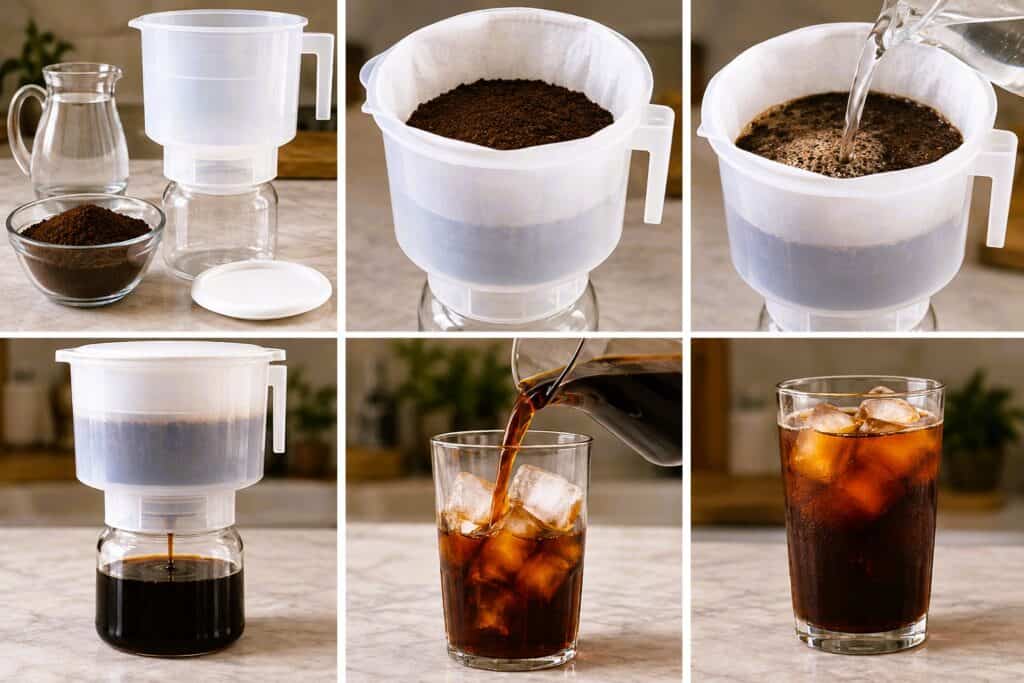
Cold brew is made by exposing ground coffee to water at a low temperature for an extended period rather than relying on heat to speed extraction. Traditional immersion recipes can require many hours, and published research notes that conventional cold extraction may take as long as 24 hours. A coffee shop may prepare cold brew in large batches because the drink needs enough contact time before filtering, chilling, storing, and serving. Grind size, coffee-to-water ratio, roast level, temperature, and steeping duration can each shift the finished flavor.
- Cold extraction commonly takes several hours.
- Many recipes use an immersion process.
- Grounds are filtered after steeping.
- Concentrated recipes may be diluted before serving.
- Recipe choices influence caffeine and strength.
Iced Coffee Brewing Method
Iced coffee usually begins as coffee brewed with hot water, which means extraction occurs much faster before the beverage is cooled. A coffee shop might brew directly onto ice, chill a prepared batch, or pour brewed coffee over a fresh cup of ice depending on its recipe and equipment. Heat removes soluble compounds from roasted grounds at a different rate than cooler water, and research comparing hot and cold methods has found differences in extraction and chemical composition. Ice can dilute the beverage as it melts, so a barista may begin with a stronger recipe to compensate.
- Hot water performs the initial extraction.
- Ice lowers the serving temperature.
- Melting ice changes beverage concentration.
- Brewing strength can be adjusted before chilling.
Cold Brew Flavor Differences
Cold brew often presents flavors differently because lower brewing temperatures change which compounds move from the grounds into the water. Studies examining cold extraction have found sensory differences involving bitterness, sweetness, sourness, aroma, and overall intensity, though the exact profile depends on the beans and recipe. A coffee shop using an immersion method may produce a cup with nutty, caramel, or malt-like characteristics, while another preparation can emphasize roasted notes. Roast profile and extraction system matter too, so cold brew should not automatically be described as having one universal taste.
- Bean origin can alter flavor character.
- Roast level changes the compounds available for extraction.
- Immersion and drip-style cold brewing can taste different.
- Serving temperature changes sensory perception.
- Milk and sweeteners can mask subtle differences.
Iced Coffee Flavor Profile
Iced coffee keeps many characteristics associated with hot extraction because heat is used before the drink reaches the ice. Research comparing brewing temperatures found that hot-brewed samples showed different acidity and volatile-compound patterns from coffee extracted at cooler temperatures. A coffee shop may select beans with fruit, cocoa, floral, or roasted characteristics depending on the flavor expected after chilling. The resulting drink can have more immediate aroma and sharper flavor contrast, while melting ice gradually softens its strength.
- Hot extraction influences aroma compounds.
- Cooling changes how flavors are perceived.
- Ice gradually reduces concentration.
- Bean selection remains a major flavor factor.

Cold Brew Caffeine Levels
Cold brew is often described as stronger in caffeine, but that statement needs context because caffeine depends on the amount of grounds, water, extraction conditions, dilution, and serving volume. One study comparing eight preparation methods found that espresso had the highest caffeine concentration, while cold brew delivered more caffeine per serving than espresso because its serving volume was larger in that experiment. Research has also shown that grind size and brewing conditions can alter caffeine extraction in cold-brew coffee. A coffee shop serving concentrated cold brew may dilute it with water or milk, so the final caffeine amount cannot be predicted from the words “cold brew” alone.
- Serving volume affects total caffeine intake.
- Coffee-to-water ratio changes concentration.
- Dilution can lower caffeine per finished ounce.
- Bean variety can influence caffeine content.
- Preparation method alone does not determine caffeine.
Iced Coffee Caffeine Levels
Iced coffee caffeine levels vary for many of the same reasons, especially because a serving may contain different amounts of brewed liquid after ice is added. Cup size at a coffee shop does not necessarily reveal how much actual brewed coffee is present, since ice, milk, syrup, and other ingredients occupy part of the volume. Research comparing brewing methods shows substantial variation in caffeine concentration and caffeine per serving, which makes broad comparisons unreliable without knowing the recipe. Consumers who track caffeine closely should pay attention to the establishment’s nutrition information when it is available instead of assuming cold brew always contains more.
- Ice affects the volume of brewed liquid in a cup.
- Recipe strength differs among establishments.
- Serving size changes total caffeine exposure.
- Nutrition information gives a better comparison than drink names.
Comparing Coffee Caffeine Intake
Caffeine deserves attention because chilled drinks can be easy to consume quickly, particularly when sweetness or milk softens coffee’s natural bitterness. The U.S. Food and Drug Administration has cited evidence indicating that up to 400 milligrams of caffeine per day is generally not associated with negative effects for most healthy adults, while sensitivity varies among individuals. A large cold drink from a coffee shop can represent a different caffeine dose from a smaller homemade serving even when both share the same beverage name. Anyone who is sensitive to caffeine, pregnant, taking certain medications, or managing a medical concern can discuss intake with a qualified health professional.
- Caffeine sensitivity differs from person to person.
- Serving size should be considered along with concentration.
- Multiple caffeinated beverages can add up throughout the day.
Cold Coffee Acidity Differences
Acidity is often discussed when people compare cold brew and iced coffee, yet the subject is more nuanced than saying one drink simply contains less acid. Brewing temperature changes extraction, and controlled research has found distinctions in titratable acidity and chemical composition between hot and cold preparations. The sensation of acidity can also depend on roast, origin, recipe, dilution, and serving temperature. A coffee shop customer who finds one preparation gentler may be responding to the entire sensory profile rather than a single measurement such as pH.
- Perceived acidity and measured acidity are different concepts.
- Roast profile influences the finished cup.
- Temperature affects chemical extraction.
- Dilution can shift sensory intensity.
- Individual taste affects how acidity is perceived.
Coffee Shop Cold Drink Trends
Cold coffee has become a significant part of American drinking habits rather than a seasonal novelty. National Coffee Association data released in 2025 found that cold, iced, and frozen blended drinks represented 31 percent of coffee consumed in its June survey, compared with 23 percent in January, while 17 percent of past-day coffee drinkers reported using cold brewing. The association’s 2026 specialty coffee reporting also classifies cold brew and nitro among non-espresso-based specialty beverages. Those figures help explain why a modern coffee shop may devote substantial menu space to chilled preparations.
- Cold coffee accounted for nearly one-third of consumption in the June 2025 survey.
- Cold brewing was used by 17 percent of past-day drinkers in that report.
- Cold brew appears within the specialty beverage category.

Choosing Between Cold Drinks
Personal preference is usually the deciding factor because neither preparation is inherently superior. Someone who enjoys a drink produced through long, cool extraction may favor cold brew, while a person who likes the character created by hot extraction but wants a chilled beverage may prefer iced coffee. Ordering both black from the same coffee shop provides a useful tasting experiment because milk, syrup, foam, and flavorings can hide differences created during brewing. Caffeine needs can break the tie, but the actual nutrition or recipe information should guide that comparison rather than assumptions about the drink’s name.
- Choose based on flavor rather than labels alone.
- Compare drinks without added flavorings when tasting.
- Ask how each beverage is prepared when the method is unclear.
- Check caffeine information when intake matters.
Cold Brew Storage Safety
Cold brew preparation also raises food-safety considerations because the brewing and storage process differs from making a cup that is consumed right after hot extraction. The National Coffee Association maintains dedicated cold brew safety resources for retailers covering preparation, storage, regulatory compliance, and foodborne-illness prevention. A coffee shop producing batches for later service has to think about sanitation and holding practices as well as taste. Home brewers should use clean equipment, appropriate refrigeration practices, and sensible storage times rather than leaving prepared beverages at uncontrolled temperatures.
- Clean brewing equipment helps reduce contamination risk.
- Cold brew may be prepared well before it is served.
- Retail operations need appropriate storage procedures.
- Refrigeration practices matter after preparation.
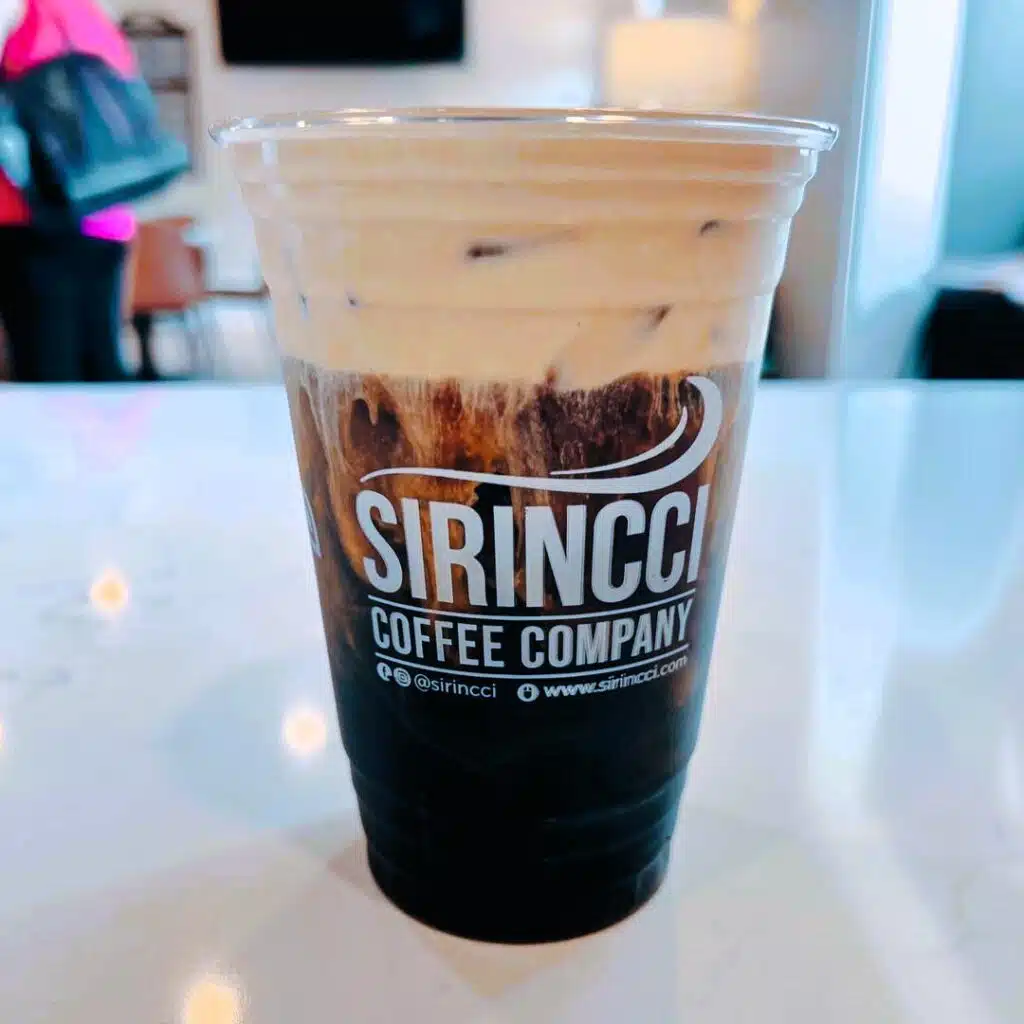
cold brew coffee
Cold Brew and Iced Coffee Key Takeaways
Cold brew and iced coffee can look nearly identical once poured over ice, yet their brewing paths create meaningful differences. Cold brew extracts roasted grounds with cooler water over an extended period, while iced coffee typically relies on rapid hot extraction followed by chilling, and those choices influence aroma, acidity, body, flavor, and chemical composition. Caffeine cannot be judged reliably by the beverage name because recipe strength, serving volume, dilution, bean selection, and brewing conditions all play a role. Understanding those differences makes a coffee shop menu easier to read and gives drinkers a better chance of choosing the flavor and caffeine level that suits them.
- Brewing temperature is the central distinction.
- Cold brew takes considerably longer to extract.
- Iced coffee begins with hot extraction.
- Caffeine varies by recipe and serving size.
- Taste differences come from several brewing variables working together.
FAQs
Is Cold Brew Stronger?
Cold brew can be stronger when it is prepared as a concentrate, but not every serving is concentrated. Water, milk, or ice may dilute it before service, so the recipe used by the coffee shop determines the finished strength.
Which Has More Caffeine?
Either drink can contain more caffeine depending on dose, bean type, brewing ratio, extraction, dilution, and serving volume. Published research shows enough variation among brewing methods that the beverage name alone cannot provide an accurate caffeine comparison.
Does Cold Brew Taste Smoother?
Many drinkers perceive cold brew differently because cool extraction changes the mix of compounds entering the beverage. Sensory research has found measurable differences in bitterness, sweetness, sourness, and flavor intensity among cold extraction methods.
Is Iced Coffee Hot Brewed?
Iced coffee is generally prepared through hot extraction and then cooled or served over ice. That distinguishes it from cold brew, where cool water performs the extraction itself.
Why Does Each Coffee Shop Cold Brew Vary?
Each coffee shop can use its own beans, grind, water ratio, extraction time, temperature, filtration method, concentrate ratio, and serving size. Those recipe choices affect flavor, body, caffeine concentration, and strength, which is why cold brew from two shops may taste surprisingly different.

We’re an elite coffee shop bringing you a commercial, full, craft coffee shop experience at one of our locations or wherever your special event may be! We would love to cater your event with trained baristas and serve hand crafted espresso drinks, coffees, frappes, smoothies, and teas to you and your guests.