
Walk into a specialty coffee shop and the menu can read like a chemistry class: espresso, drip, pour-over, cold brew. Every one of those words is a different brewing method, and each one pulls something different out of the same beans. Here's a plain-English guide to the methods you'll see most, and what each one tastes like in the cup.
Espresso
Espresso is the base for most of the drinks on a coffee shop menu. Hot water is forced through finely ground, tightly packed coffee under high pressure, and a shot takes only about 25 to 30 seconds to pull. The result is a small, concentrated, syrupy shot with a layer of crema on top.
On its own, espresso is bold and intense. Mixed with milk, water, or flavor, it becomes a latte, cappuccino, Americano, cortado, or macchiato. If you like a strong, rich coffee flavor that still comes through milk and syrup, espresso drinks are your lane.
- Grind: very fine
- Time: about 25 to 30 seconds
- Taste: bold, concentrated, full-bodied
Drip Coffee
Drip is the classic cup of coffee. Hot water drips over medium-ground coffee in a filter, and gravity does the rest. Because it brews in batches, drip is quick to pour and easy to refill, which makes it a morning favorite.
Drip coffee is smooth and balanced, with less intensity than espresso. It's also the base for a café au lait, which mixes brewed coffee with steamed milk.
Pour-Over
Pour-over is drip coffee made by hand, one cup at a time. A barista slowly pours hot water over the grounds in a cone-shaped dripper, controlling the speed and flow. That extra care brings out more of the bean's flavor, so you'll often taste brighter, cleaner notes than you would in a batch of drip.
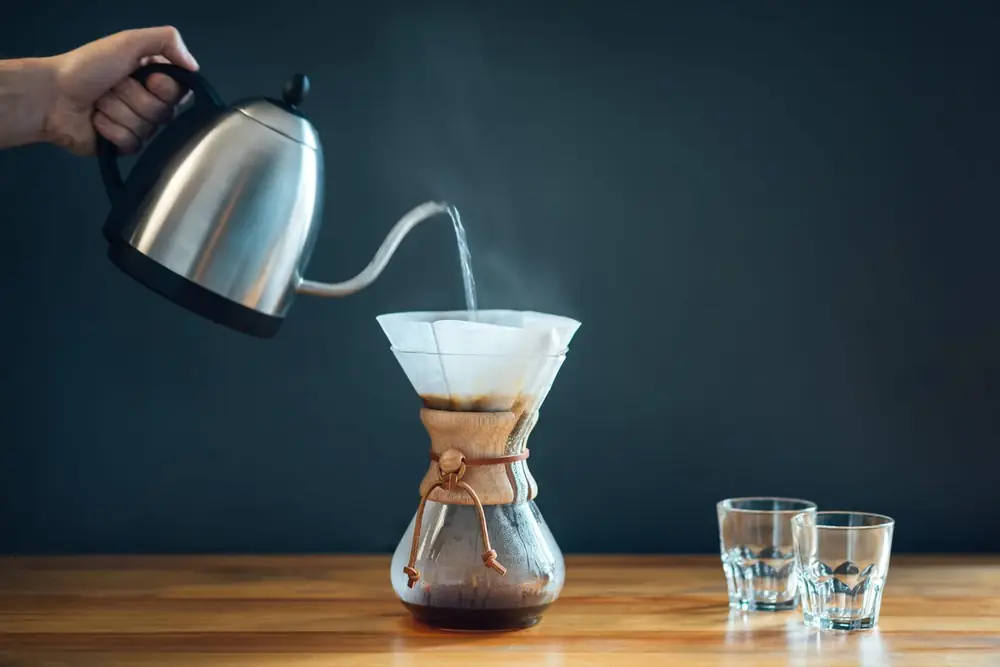
A Chemex is a popular pour-over brewer. It uses a thick paper filter that catches more oils and fine particles, which gives the coffee an especially clean, light body. Pour-over takes a few extra minutes, but it's worth the wait if you want to really taste your coffee.
- Grind: medium-fine
- Time: about 3 to 4 minutes
- Taste: clean, bright, nuanced
French Press
A French press steeps coarse grounds directly in hot water for about four minutes, then a metal mesh plunger pushes the grounds to the bottom. Because the mesh lets natural oils through, French press coffee has a heavier, fuller body than filtered methods. It's a common way to brew at home.
Cold Brew
Cold brew skips hot water completely. Coarse grounds steep in cool or room-temperature water for many hours, usually somewhere between 12 and 24, before the coffee is strained. The long, slow extraction makes a drink that is smooth, naturally sweet, and lower in bitterness and acidity than hot coffee poured over ice.
Cold brew is great black, with cream, or topped with sweet cold foam. If you want the full comparison, read our post on the difference between cold brew and iced coffee.
- Grind: coarse
- Time: many hours of steeping
- Taste: smooth, mellow, low bitterness
Which Brewing Method Should You Try?
It depends on what you like in a cup:
- Bold and strong: an espresso drink like a cortado or Americano
- Classic and quick: a cup of drip coffee
- Clean and flavorful: a pour-over
- Smooth and cold: cold brew
Brewing Methods at Sirincci Coffee Company
At Sirincci, you can taste several of these side by side. Our espresso bar pulls shots for lattes, cappuccinos, cortados, and Americanos. We also brew drip coffee, hand-poured pour-overs, and Fair Trade cold brew, all from locally sourced, craft-roasted beans.
Planning an event? Our coffee catering can add a Chemex or pour-over bar with four drippers, so your guests can watch fresh coffee brew right in front of them. Check out the full Sirincci menu to find your next favorite.